
Community
Dallas Police seek public's help in finding missing man, Angel Cervantes
By Lindsey Harper
Advertisement · Why this ad?
Rachel has spent over 15 years in journalism, starting her career at the Austin American-Statesman before moving to various roles in Dallas. A graduate of the University of Texas at Austin, she has a knack for uncovering the stories that define local communities and fostering engagement through her comprehensive reporting. Rachel is passionate about empowering voices often left unheard.
More from Rachel →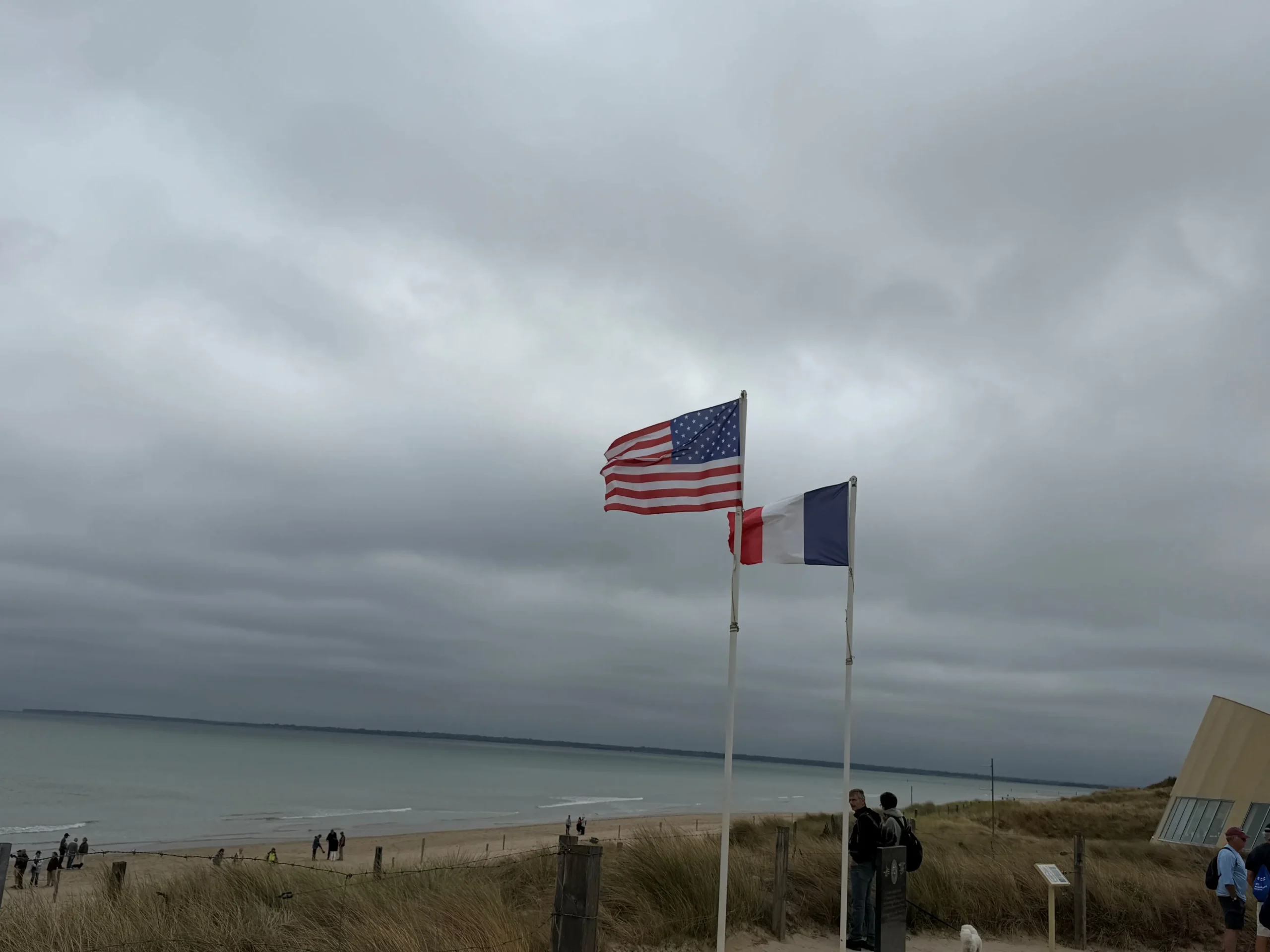
Comment This summer, my daughter married a Frenchman in his hometown south of Paris. Signs of Nazi occupation and subsequent American liberation can be found throughout the tiny towns in Île-de-France that never made the history books but were unnamed characters in the story. My daughter’s new family owns an ancestral building with a wine cellar where long, narrow wooden benches still line the walls of shelters used by local children during air raids. During the wedding reception, my son-in-law’s grandmother shared with me her life-long gratitude for her American liberators, who marched into town when she was just 10 years old. With tears in her eyes, she told me she was so pleased to have an American girl join her family. After the wedding, my husband and I traveled northwest, to Brittany and then to Normandy, where we visited Utah Beach, Omaha Beach, their adjacent museums, and the Normandy American Cemetery and Memorial. As a history buff, I’ve visited a lot of museums and consumed a lot of media about World War II, but nothing prepared me for the intensity of experiencing those places in person. According to Pew Research, as of 2023, roughly 78% of living inactive military members served during wartime, and 22% served during peacetime. Vets who served in the last 30 years make up the largest number of living veterans, with the smallest number, of course, being World War II veterans, who make up only 1% of living American veterans. With so few living World War II veterans, I wanted to know how the bravery and sacrifices of the men who landed on June 6, 1946 have impacted the lives of people in my own community. Fortunately, several members agreed to share their stories and photos of loved ones who fought during the D-Day campaign. Rob Holmes, Highland Park I live in Highland Park and have lived in the Park Cities since 1995. I am a graduate of the United States Military Academy at West Point, and soon after graduation I served as an Armor officer in Operation Desert Shield / Desert Storm and was decorated with the Bronze Star for Valor under Enemy Fire for actions in Iraq. My father, Robert (“Bob”) Hicks Holmes was born in 1914. He grew up in a small town in North Carolina, Lumberton, and had his teenage years during the Depression. He and his brother were raised by their grandmother who was not formally educated, as most women were not back then, but she taught her grandsons to read the Bible, the Constitution, Shakespeare, and baseball box scores. No one in the family had ever attended college, but my father had that ambition, just no money, and few who believed in him. His high school principal told him he “wasn’t college material.” He found his way to Wake Forest University and earned a football scholarship; he then learned the military would pay for medical school if he agreed to serve afterward. So, he went to Tulane and was commissioned as a Medical Doctor in the Army upon graduation and would later have post-graduate studies at Duke and Harvard … but he wasn’t college material. He deployed to England as we massed soldiers there before the D-Day liberation. They billeted him with an English family while he waited for the big day. When our forces landed at Normandy, he crossed several days after June 6, landing at Normandy, and soon after was assigned to the 4th Armored Division of General Patton’s famed Third US Army. The army raced across France, liberated Paris, relieved the 101st Airborne from the siege at Bastogne, crossed the Rhine, and ended the war in the German city of Regensburg on the banks of the Danube. After the war, he stayed in the Army for a career. He was a pathologist by specialty, and he had a particular expertise in ballistics. He deployed to Japan and did the “Battle Damage Assessment” (BDA) for the atomic blasts at Hiroshima and Nagasaki. He was the pathologist for the Able-Baker Mission which sent the first mammals (monkeys) into space before the Mercury program sent astronauts. He was the pathologist for the Army’s first Kevlar body armor, which is likely what he was most proud of, as Kevlar has saved the lives tens of thousands of service members and law enforcement officers. Later, his son would wear Kevlar for his attack into Iraq. In 1962, he was Chief of Pathology at Walter Reed Army Hospital in Washington, where he met Malinda Deal from Arlington, Virginia. They married two years later when he was 50, and she was 25. They lived in Tokyo and Seoul before he got promotion orders to Brigadier General and travel orders to Vietnam, but his young bride had some news: she was pregnant. So, he turned down the promotion and submitted his retirement papers and at 52, Bob Holmes became a first-time father. Two years later, my brother was born. My parents were married for 37 years until he died from a fall at 86. He had practiced pathology until he was 80, and his short retirement was spent often reading the Bible, the Constitution, Shakespeare, and baseball box scores. Colonel Robert H Holmes, USA, Medical Corps, rests in Arlington National Cemetery, interred with a Bible, an American flag, his marriage certificate, the two birth certificates of his sons, and since we have added four birth certificates of his grandchildren. View Gallery View Gallery View Gallery Advertisement More Living View All Living Annual National Night Out Celebration at SMU a Scorching Success By Sarah Hodges Living Mom May Need Help. You May, Too. By Contributor / Vanessa Randall Living Mustangs Incorporate Service Into Year-Round Gait By Contributor / Karen Chaney Robert Hicks Holmes {{ oneIndex }} / {{ images.length }} Advertisement Related Content Tracy Walder, Highland Park My name is Tracy Walder and I live in Highland Park. My grandpa, Jack Davis, was a Staff Sergeant, combat medic stationed in France. What is interesting about my grandpa is what he refused to share and what he kept. He would talk about how he was in D-Day, but wouldn’t share about D-day itself. He would talk about how proud he was to be present for the signing at the Treaty of Reims, 11 months later. My dad always told me that the amount of death and suffering that he witnessed being a medic at D-Day was most likely too much for him to process. However, I had the opportunity when I was 16 to travel with him to Normandy (we went as a family). My grandpa was deeply impacted by what he did and saw and was always a stoic, loving man of few words, I really don’t recall him showing emotion. However, I remember him walking away from us there and coming back with red eyes. I can only suspect that he had been crying. Though he wouldn’t share his stories, he kept every item he had in pristine condition. Both of my grandpas served in WWII, and my dad and uncle served in Vietnam so service to our country runs in our blood and is expected in my family. I think all these men inspired me to find a way to serve my country and though I didn’t join the military, I found another way to carry on their legacy of service. View Gallery View Gallery View Gallery Advertisement More Living View All Living Annual National Night Out Celebration at SMU a Scorching Success By Sarah Hodges Living Mom May Need Help. You May, Too. By Contributor / Vanessa Randall Living Mustangs Incorporate Service Into Year-Round Gait By Contributor / Karen Chaney Jack Davis, Tracy Walder’s Grandfather {{ oneIndex }} / {{ images.length }} Advertisement Related Content Jennifer Friday, Highland Park My grandfather who is deceased is Edward K Rogers. He was deployed as an Army Chaplain and landed in France on D-Day. He had degrees in history and theology, so he wrote notes every night of his day. When he arrived home, he put all his notes into a book called Doughboy Chaplain , a look at his life as a pastor, husband, and father of three children. Every Memorial Day I read the D-Day chapter to remind me of all the lives sacrificed for the freedoms
By Lindsey Harper

By Nia Johnson

By Tommy Lee

By Miguel Torres